Supporting Research and Scholarship from Concept to Completion
ORSP provides a “full service” shop that supports faculty and staff in both pre- and post-award activities from idea generation through award closeout. More…
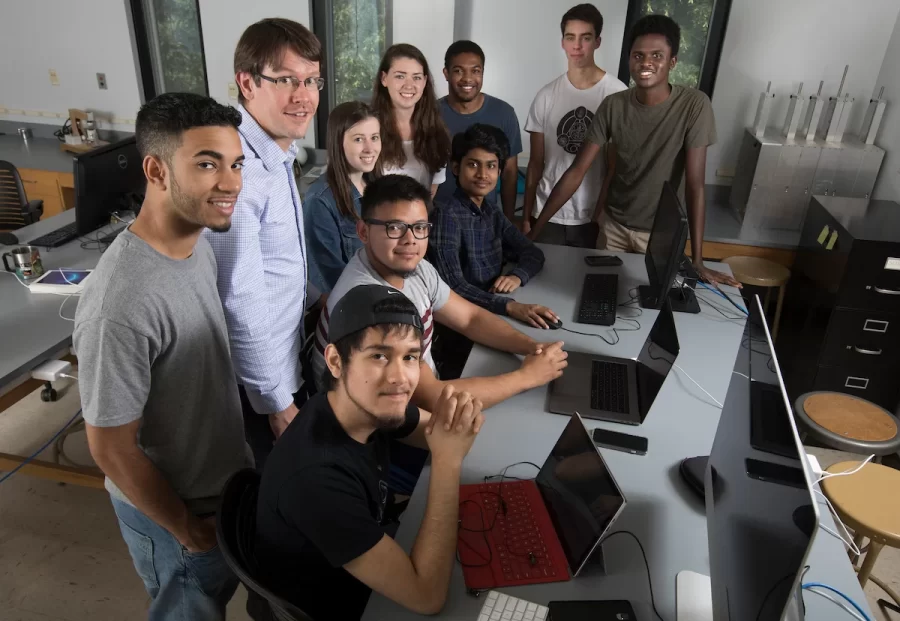
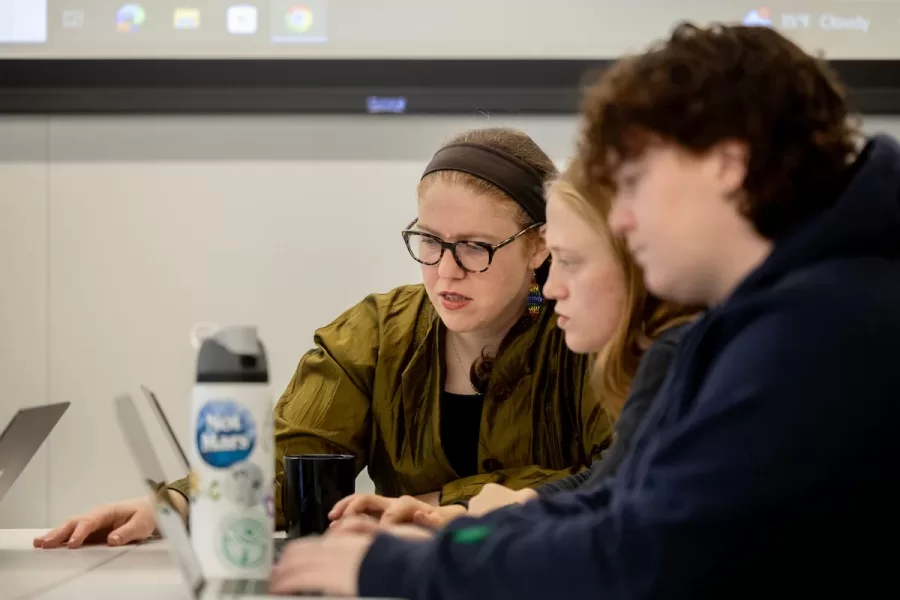
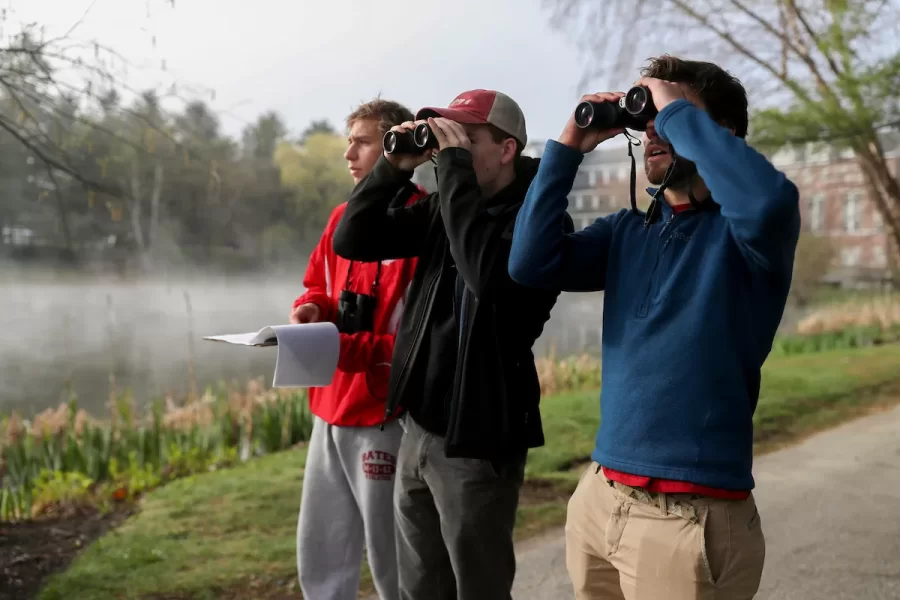
Professor of Biology Don Dearborn teaches a Short Term course called Bio s32 “Avian Biology/Lab.” They began in front of Carnegie Science at 6 a.m. and dispersed with binoculars and maps after having bagels and juice. Their assignment was to map the locations of several different kinds of birds. “Instructions: Visit your assigned areas of campus. Walk slowly through the area to cover it fully. Map any observations of our focal species, using the symbols from above. Movements of individual birds are very useful, as are simultaneous observations of two different birds.” Ellie Bengtsson, red Adam Zupanic, green Sam Reis, grey and pink sweatshirt Tess Miller, blue and white Patagonia Anna Helms, blue hoodie Madison Liistro, green fleece Ryan Main, blue jacket, King Athletics Paige Guevarra, brown and white sweater Gabe Benson ‘20 of Maplewood, NJ (red CC jacket) Will Nelligan ’20 of South Portland, Maine (black jacket) Ian Rashleigh, ’20 of Tiverton, R.I., (blue marmot) Robin Morning Dove Red Wing Blackbird
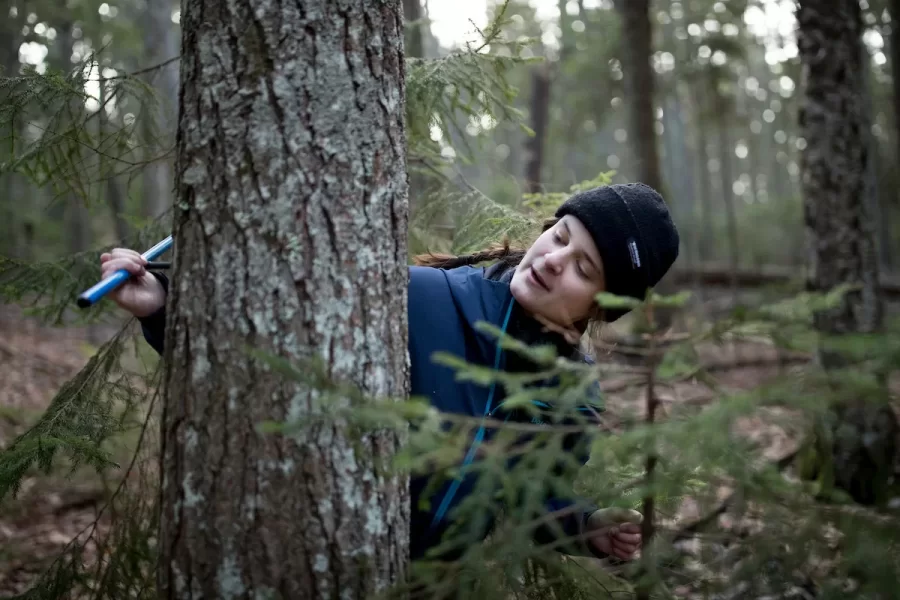
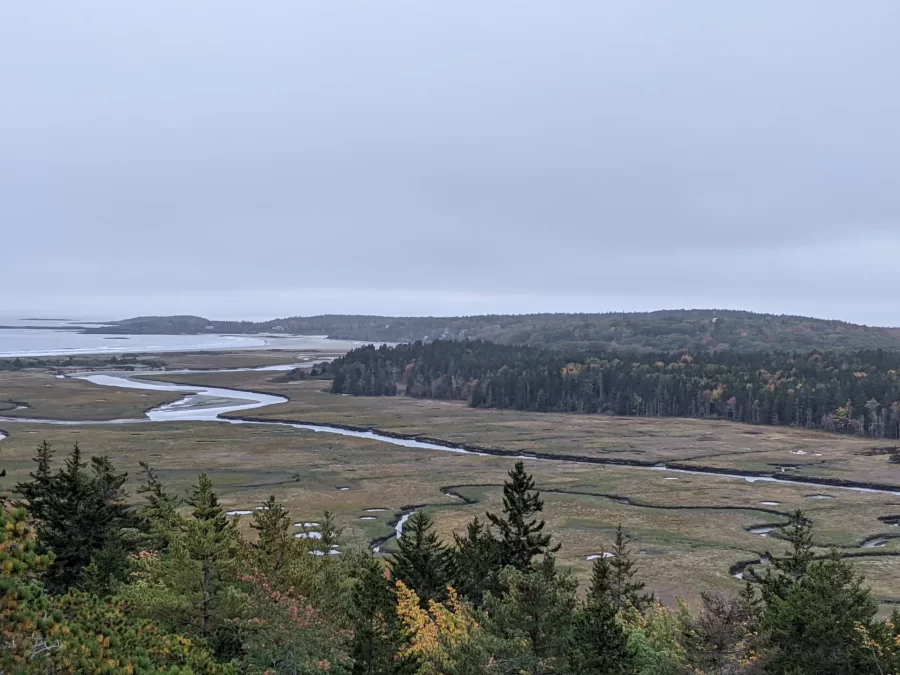
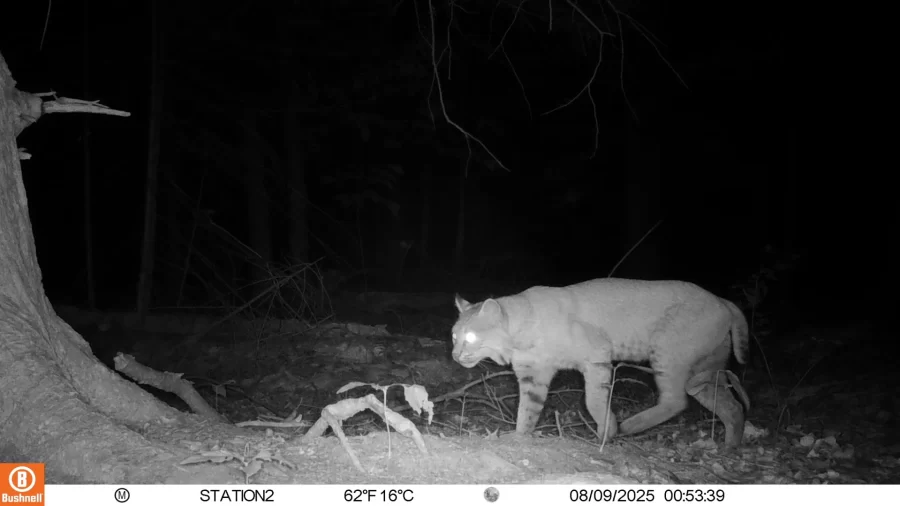
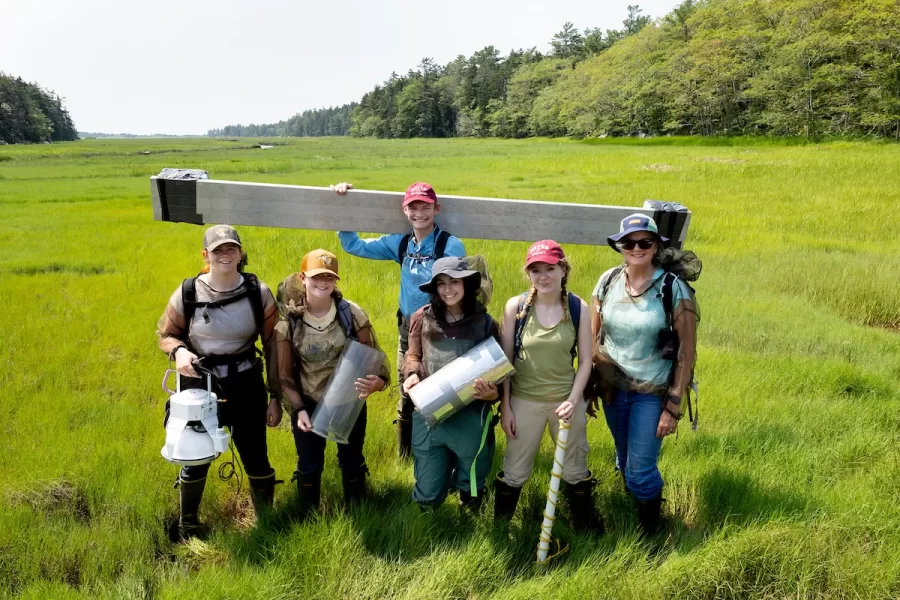
Isobel Curtis ’17, who graduated in May as a double major in Biology and Environmental Studies. Her thesis investigated the prominence of how long we will indulge infestation in Morse Mountain and it was discovered by my thesis advisor in the spring of 2015…it was Brett Huggett. We knew it was there but we did not know to what extent the hemlock trees were infested there so that was kind of my primary goal was figuring out the percentage of trees that were infested and also how heavily there are infested. I found out that 60% of the trees are infested and not heavily, it is a relatively young infestation…It is hard to calculate how long it has been there but maybe somewhere in the realm of 10 years and so that work got me involved in the area and we thinking about how is the forest going to respond looking 20 years ahead once the hemlock trees are gone. So the specific goal of your thesis was to figure out the extent of indulgent infestation but that got you thinking about these other things that you have now brought to your work with Laura. I: Exactly. And so I had an ES internship in short term of my senior year which was focusing on creating a habitat map of the entire area that showed the different forest communities because the thinking was if we know it is out there and we know kind of interesting landscape features such as vernal pools that might help stimulate further student research and is also just a great resources for the land managers to have in general. .
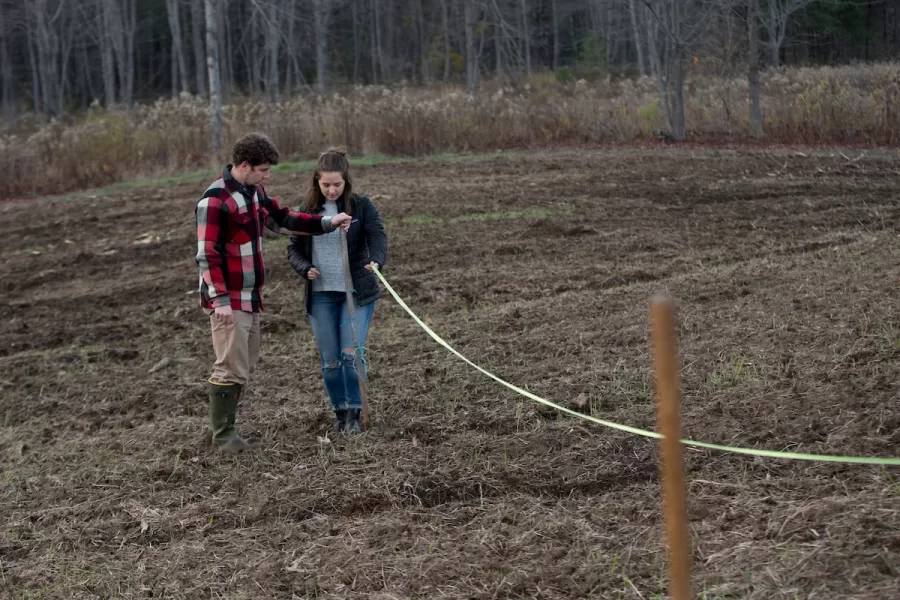
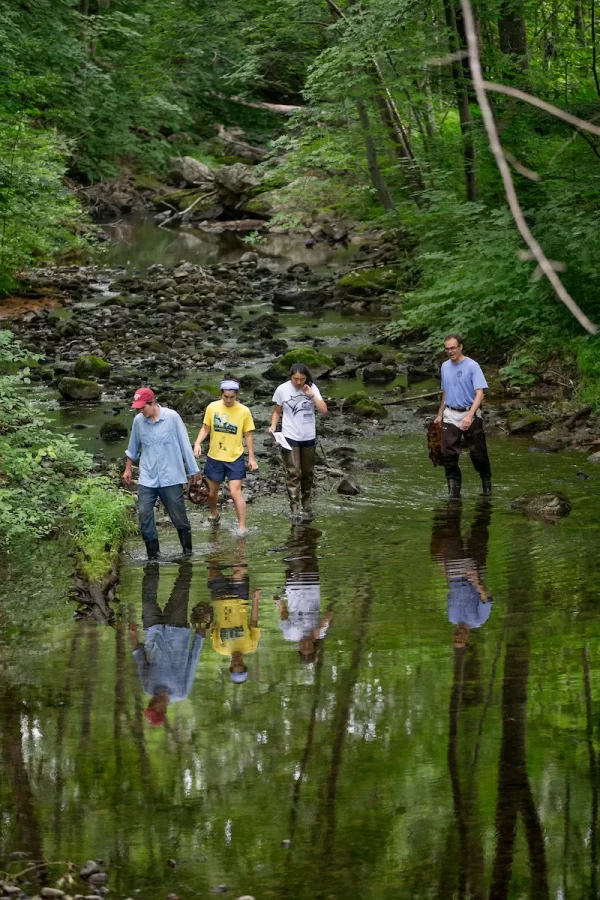
Students in ENVR 417/Community-Engaged Research in Environmental Studies, work with community partners at a farm on Old Webster Road in Lewiston, where members of the Somali Bantu Community Mutual Assistance Association of Lewiston/Auburn have been farming. Bates students are Dylan Thomas ’18 of Monmouth, Maine, Drew Perlmutter ’18 of NYC and Julia Nemy ’18 of San Francisco (ponytail).
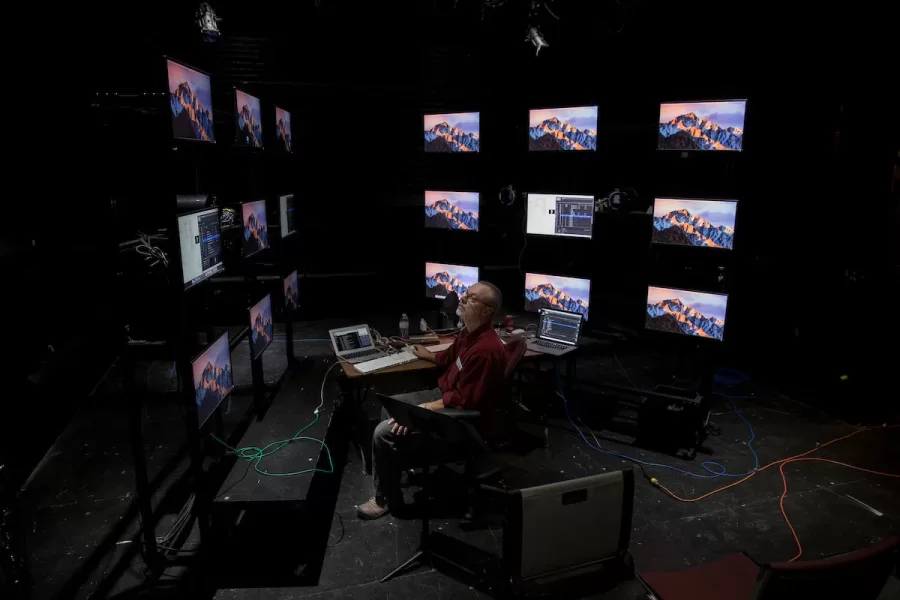
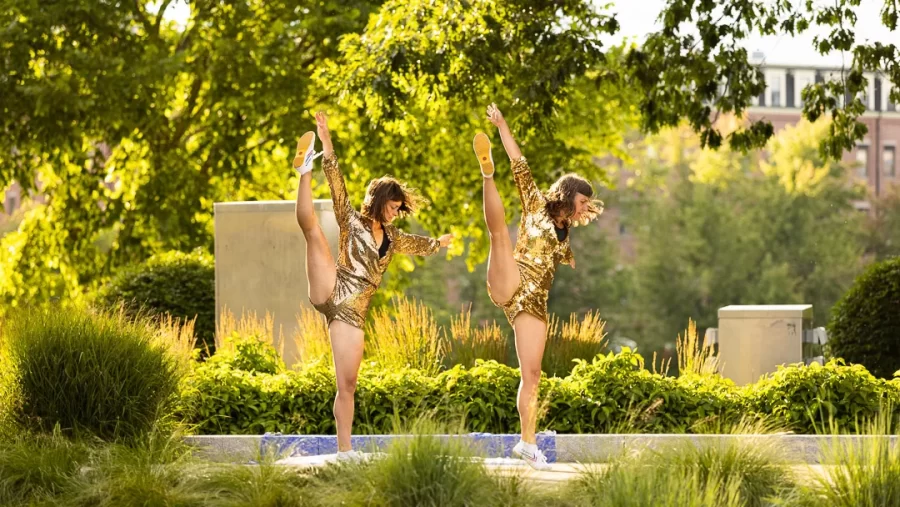
Senior Lecturer and Managing Director of Theater and Dance Micheal Ready works on technical cues with 18 monitors that will form the backdrop for the upcoming theater production of Nikolai Gogol’s “Diary of a Madman” performed by Nate Stephenson ’18.
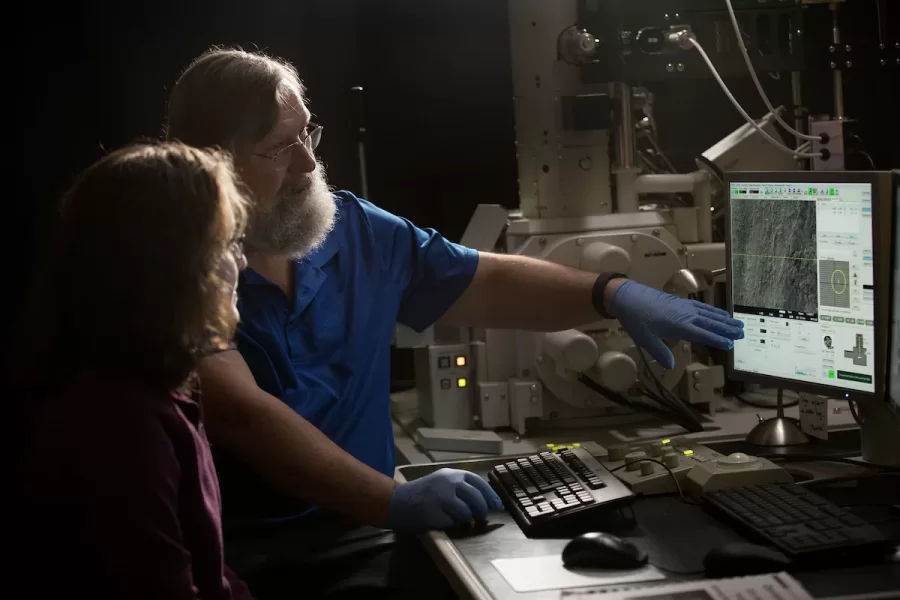
Greg Anderson, assistant in instruction in biology, works with bio major Ruth van Kampen ’19 of Brunswick, Maine, in the Carnegie Science Microscopy Lab. About the Laboratory The Electron Microscopy and X-Ray Microanalysis Laboratory is a shared facility of the Biology and Geology Departments at Bates College. The lab is based upon an analytical, variable vacuum FE-SEM (JEOL JSM-7100FLV with a Noran System 7 EDS System) and is used by faculty and students for research, teaching, and outreach programs in Biology, Geology, and Chemistry.
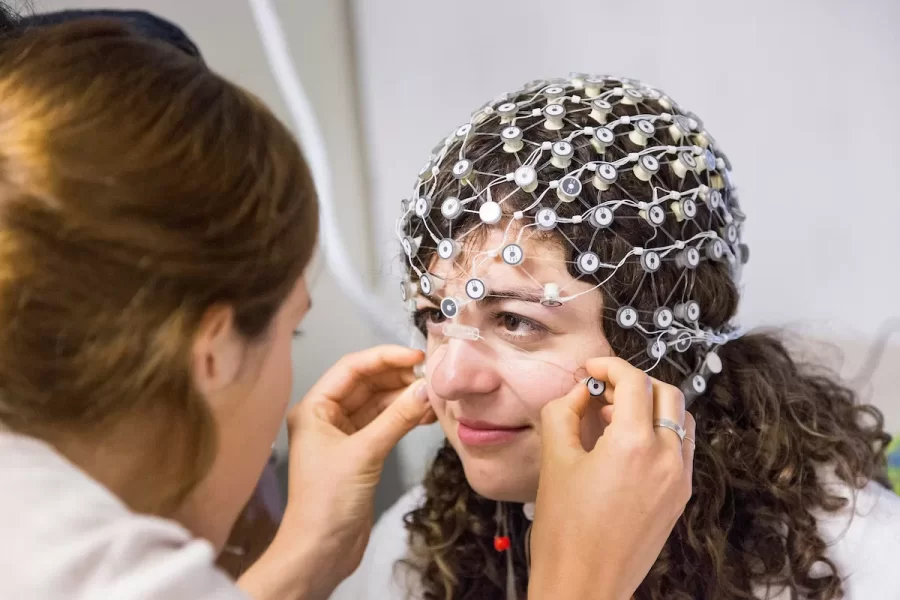
To practice her skills, a colleague fits Melody Altschuler ’17 of Lyme, Conn., with an electroencephalography net, a non-invasive way to measure brain activity. Altschuler was a summer intern at Boston Children’s Hospital under Harvard Medical School’s Susan Faja, a leader in autism research. (Josh Kuckens/Bates College)
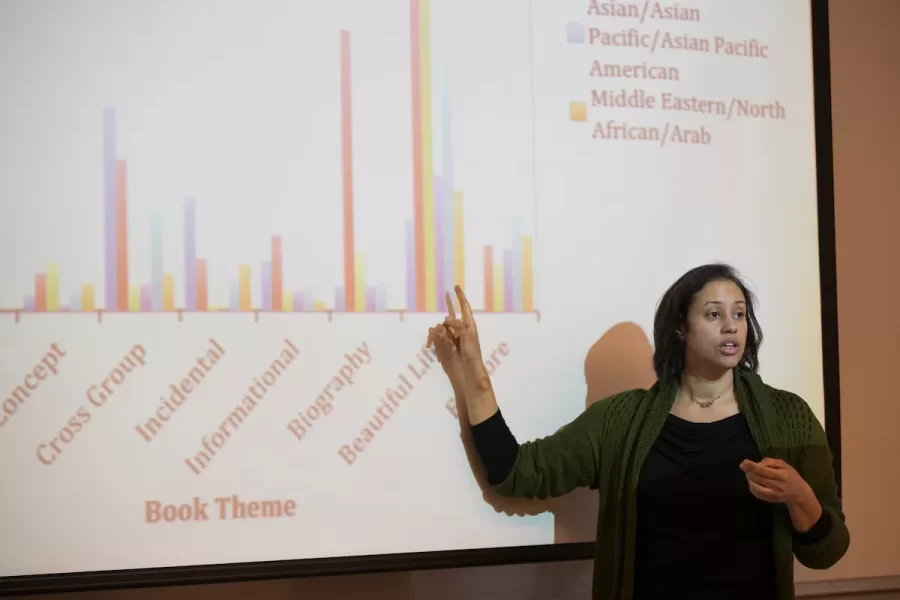
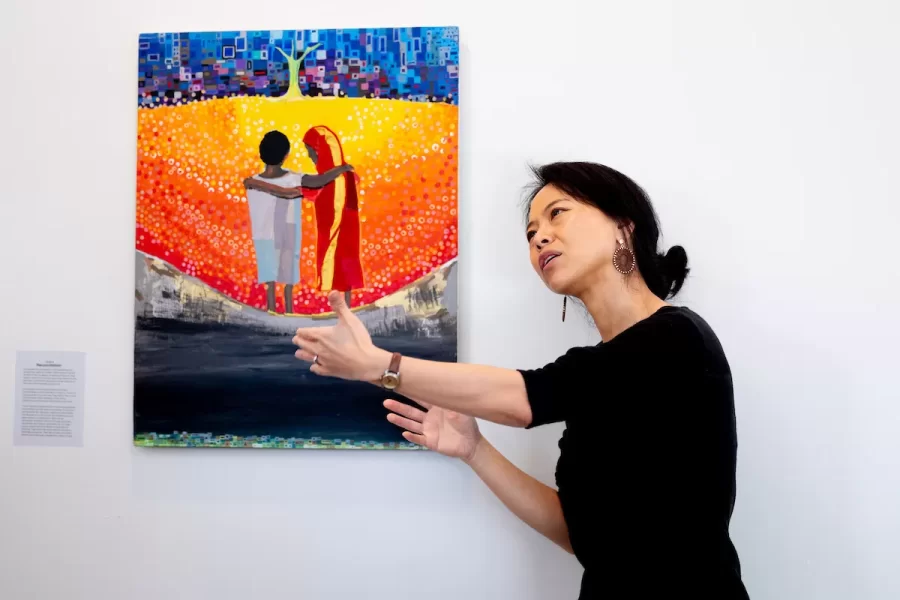
Associate Professor of Psychology Krista Aronson discusses themes and perspectives that underlie children’s literature during a Public Works in Progress program sponsored by the Harward Center. The multiyear research, in collaboration with elementary schools and community agencies, has explored storybook- and multimedia-based interventions. (Phyllis Graber Jensen/Bates College)
ORSP by the Numbers
$9.7M in external funding in FY26
77 proposals totaling $238K in internal awards during AY25-26
84 faculty supported with proposals and awards in FY25
48 student researchers supported by external grants in AY25-26
Research and Scholarship News
Amazing things are happening in Research and Scholarship at Bates! From recently awarded grants to new publications to upcoming opportunities and workshops, there’s always something going on!
- Tristan Koepke receives Library for the Performing Arts 2026 Dance Research Fellowship
Assistant Professor of Dance
The Library for the Performing Arts has announced that Tristan Koepke has received a 2026 Dance Research Fellowship for his work Solemnities which will explore “José Limón’s choreographic works and papers to investigate how 20th-century American modern dance imagined alternatives to mid-century masculine performance, specifically focusing on queer histories and speculative masculinities.” Congratulations, Tristan!
- Dylan Freas receives funding from the American Chemical Society
Assistant Professor of Chemistry
Dylan Freas has received an Undergraduate New Investigator research grant from the American Chemical Society Petroleum Research Fund to support his project entitled “Synthetic Approaches Toward Hydrolytically Degradable Polyethylene Glycol and Poly(2-Oxazoline)s.” Congratulations, Dylan!
This work is supported by the donors of ACS Petroleum Research Fund under Undergraduate New Investigator Grant 70210-UNI7.
Resources for Current Faculty and Staff
The Office of Research and Sponsored Programs manages internal and external funding for Bates faculty and Staff. We help find funding opportunities, apply for grants, and manage your awards.
Internal Funding
Internal Funding
External Funding
External Funding
Compliance Resources
Compliance Resources
For more information on internal funds for student research, please visit the Student Research page. To learn more about fellowships for graduate study or other post-Bates endeavors, please visit Graduate Fellowships. If you are a Bates student who needs financial aid, please visit Student Financial Services.